
Bollywood Actor Salman Khan suffered a second setback on Wednesday when the Bombay high court rejected his bail plea following his conviction and sentencing in the 2002 hit-and-run case earlier in the day.

'On June 15, 1965, Major A K Afridi of the Pakistan army was captured by Papa's 1 Mahar unit near Vigokot, when he accidently walked into Indian territory.' 'While he was being airlifted to Delhi from Kutch, Major Afridi made a request: He wanted to watch Sangam>, the movie starring Raj Kapoor and Vyjayantimala. It was a request that the Indian Army fulfilled.' 'Major Afridi was sent with armed escorts to watch the movie in Ahmedabad and then sent to Delhi for further interrogation.'

Is Being Human, the actor's apparel brand, an extension of his persona or is it a move to correct his bad-boy image?

'The only positive I see are the youth of India who were earlier just after money. The young now want to do something for society.'

Single mother Gauri Sawant hopes to change the way people view transgenders in India.

Categorising the original settlements of gaothans and koliwadas as slums, the authorities in Mumbai are keen to develop them into commercial complexes. The residents are unwilling to cede their rights. Ranjita Ganesan reports

'I told the lady I was two months pregnant, but that did not seem to bother her.' A Ganesh Nadar/Rediff.com visits the infamous cages of Mumbai's oldest red light district, Kamathipura, to find out how human trafficking has given India the awful reputation of the nation with the highest slavery rates in the world.

On the one had are sanitation oriented social enterprises and on the other are awareness raising campaigns by government.

Admittedly, EVMs too have a UID number and any convergence of data can make the secret ballot system a party of history, warns Dr Gopal Krishna in the 5th part of his series against Aadhaar.

Dr Lakshmi Vijayakumar examines why India's southern states register more suicides than the northern states. Shobha Warrier reports

Prakash Javadekar enjoys being information and broadcasting and parliamentary affairs minister, but heading the green ministry is turning out to be thornier than he had expected.
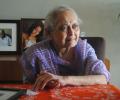
Sheela Bhatt meets Bharti Patel, a truly exceptional mother of our times whose son Dr Vikram Patel was recently ranked among Time magazine's 100 most influential people of 2015, to find out her recipe for a remarkable upbringing.
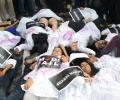
'Human rights violations are there in rural areas and in cities. In rural areas it is crude and in the open. In urban areas it is well hidden.' 'Awareness has grown several fold. India has 160 national and state human rights institutions. No other country in the world has this.' 'Unfortunately the right to association, right to assembly, freedom of expression, right to protest and discuss are all being curtailed systematically one by one.'

Opposition said saying it lacked vision and road map to execute ideas.
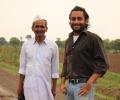
Shuvajit was confident of making a huge difference in the lives of people in rural India.
 © 2026 Rediff.com - Advertise with us - Disclaimer - Privacy Policy - Sitemap - Feedback - About us - Terms of use - Grievances